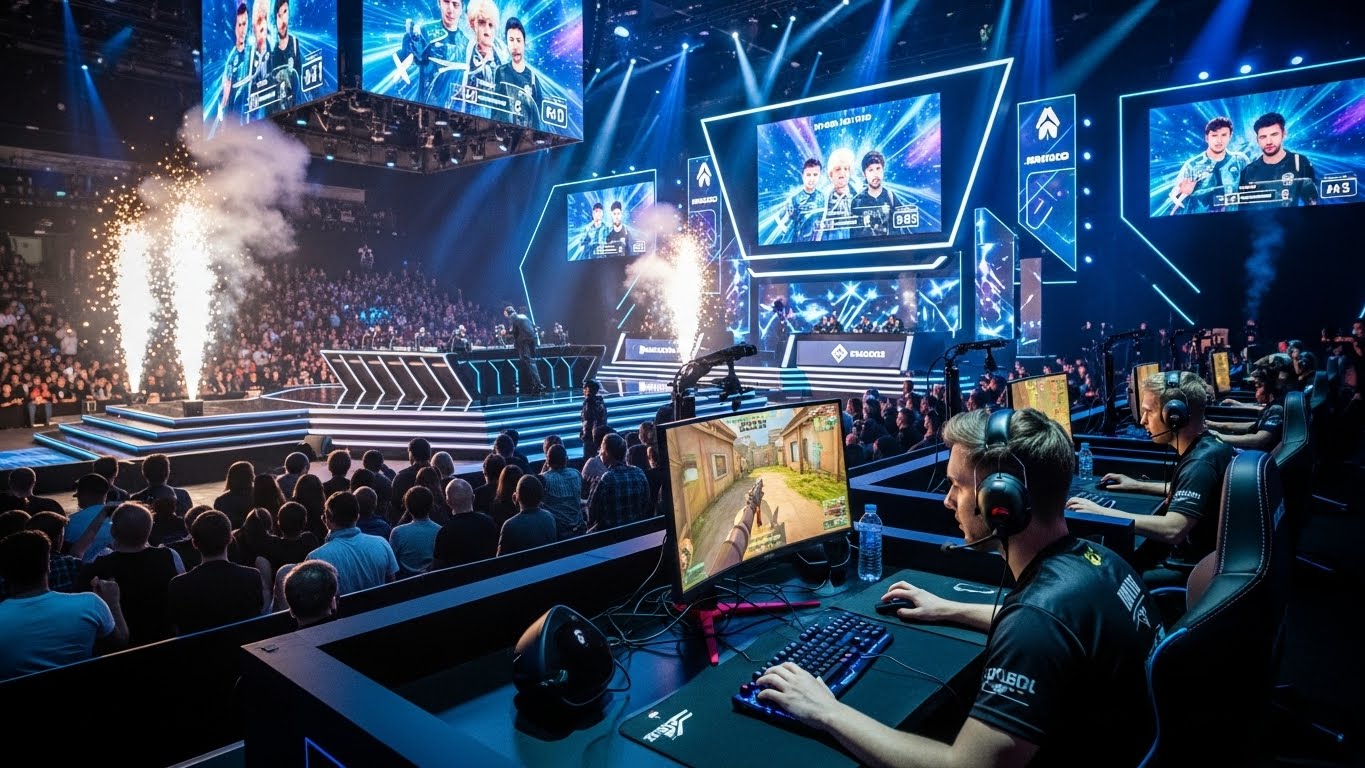

Esports, or electronic sports, has transformed from a niche hobby into a global phenomenon, with millions of fans, professional players, tournaments, and lucrative sponsorships. Over the years, this industry has undergone a remarkable evolution, becoming one of the fastest-growing sectors in entertainment, comparable to traditional sports in terms of viewership and prize money. In this blog post, we will explore the history, growth, impact, and future of esports, providing a detailed look at how it has become the powerhouse it is today.
The Birth of Esports: Early Beginnings in the 1990s
The Roots of Competitive Gaming
Esports traces its origins back to the early days of video games. In the 1990s, as personal computers and gaming consoles became more widely available, people began competing in local multiplayer games. Early titles such as Street Fighter and Doom had rudimentary competitions, but they were often informal events held in arcades or small gaming communities.
The first notable esports event occurred in 1997 with the launch of Red Annihilation, a Quake tournament that drew attention for its large prize pool and widespread participation. Players across the globe competed, and the event was broadcast over the internet, marking one of the first instances of gaming as a competitive sport.
The Rise of LAN Parties
One of the driving forces behind the early esports scene was the phenomenon of LAN parties (Local Area Network). These gatherings allowed gamers to connect their computers in a physical location to play multiplayer games like Warcraft, StarCraft, and Quake in real-time. LAN events became a vital part of the gaming community, helping build the foundation for future esports tournaments.
As the internet evolved, online gaming platforms like Battle.net (for StarCraft) and Halo on Xbox Live allowed players to compete without needing to meet in person. These platforms helped cultivate the idea of online competition and laid the groundwork for the massive global esports industry we see today.
The Growth of Esports in the 2000s
The Emergence of Professional Teams and Organizations
The early 2000s saw the formation of the first professional esports teams and organizations. Games like Warcraft III, Counter-Strike, and StarCraft continued to grow in popularity, with professional players emerging as stars in their own right. These players began earning sponsorships, salaries, and even competing in tournaments that offered cash prizes.
Esports was no longer confined to hobbyists. Players were able to make a career out of competitive gaming, and organizations began to form around specific games. For example, in 2001, the World Cyber Games (WCG) was founded, and it quickly became one of the most prestigious esports tournaments globally. The rise of esports leagues and tournaments was further exemplified by the creation of the Major League Gaming (MLG) in North America, which provided structure and organization to the esports scene.
The Growth of Streaming Platforms
Another key factor in the rise of esports during the 2000s was the advent of streaming platforms. Websites like Twitch, which launched in 2011, revolutionized how fans could watch competitive gaming. Twitch allowed players to stream their games in real-time, enabling fans to watch live tournaments, interact with players, and even participate in the gaming experience.
With millions of viewers tuning in to watch these broadcasts, the popularity of esports grew exponentially. Players became influencers, with their streams drawing substantial audiences and creating an entirely new form of entertainment. Sponsors and advertisers soon took notice, and this marked the beginning of esports’ transition from a niche activity to a mainstream entertainment industry.
Esports in the 2010s: A Mainstream Entertainment Industry
The Explosion of Esports Events and Prize Pools
By the 2010s, esports had firmly established itself as a mainstream form of entertainment. Tournaments like The International for Dota 2, League of Legends World Championship, and CS:GO Major Championships began offering multi-million-dollar prize pools. These massive events drew crowds of thousands, and millions of viewers tuned in online to watch their favorite teams compete.
The 2013 edition of The International set a new standard for esports prize pools. With the support of the Dota 2 community, the tournament’s prize pool grew to over $2.8 million, which was unheard of at the time. In the following years, the prize pool for The International ballooned, reaching over $40 million by 2018. These enormous prizes attracted the attention of players, teams, and investors from around the world.
The Rise of Mobile Esports
While traditional PC and console esports continued to dominate, the rise of smartphones led to the emergence of mobile esports as a growing sector of the industry. Games like Clash Royale, PUBG Mobile, and Mobile Legends offered competitive experiences to a broader audience, especially in regions like Southeast Asia, India, and China, where mobile gaming is especially popular.
The growth of mobile esports further expanded the global reach of competitive gaming, bringing esports into the hands of people who did not have access to high-end gaming PCs or consoles. The Arena of Valor World Cup and PUBG Mobile World League are just a few examples of successful mobile esports tournaments with sizable prize pools and global followings.
Investment and Sponsorship
As the viewership of esports continued to grow, so did the level of investment and sponsorship. Major brands from outside the traditional gaming sphere, such as Coca-Cola, Intel, and Nike, began sponsoring esports tournaments and teams. Investors recognized the potential of esports to reach young, tech-savvy audiences, and they poured millions of dollars into esports organizations, creating an even more lucrative ecosystem for players, teams, and event organizers.
Esports teams began to look like traditional sports organizations, with professional players earning salaries, coaching staff, and even branding deals. Esports athletes gained significant followings, with some becoming global superstars, comparable to athletes in traditional sports.
The Impact of Esports: Cultural and Social Influence
A Global Community
One of the most remarkable aspects of esports is its ability to unite people from around the world. Players, fans, and viewers come together across nationalities, languages, and cultures to celebrate their shared passion for competitive gaming. Esports has created a global community where fans can interact with one another through social media platforms, fan forums, and streaming services.
Esports has helped bridge cultural divides by providing a common ground where people can compete, share experiences, and connect with others. Whether it’s a gamer in North America playing with someone in South Korea, or a fan in Brazil cheering on their favorite team, esports has fostered a sense of unity among players and fans alike.
Esports and Traditional Sports
As esports grew in popularity, comparisons to traditional sports became inevitable. Esports events are now broadcast on major sports networks, and many esports organizations have formed partnerships with traditional sports teams. In 2017, the Philadelphia 76ers NBA team acquired an esports team, marking one of the first instances of a traditional sports franchise embracing the esports phenomenon.
This growing overlap between esports and traditional sports has led to the recognition of esports as a legitimate form of competition, with some even calling for esports to be included in the Olympic Games. While esports’ inclusion in the Olympics is still a matter of debate, its rise as a global cultural force is undeniable.
The Social Impact of Esports
Esports has also played an important role in changing how society views gaming. In the past, gaming was often seen as a solitary or antisocial activity, but esports has shown that gaming can bring people together and create communities. Additionally, many esports organizations have become advocates for inclusivity, diversity, and mental health awareness in gaming.
Some esports organizations have taken steps to create programs and initiatives to support underrepresented groups in gaming, including women and minorities. In this way, esports is helping to pave the way for more diverse participation in the gaming world.
The Future of Esports: What Lies Ahead?
Virtual Reality and Augmented Reality
As technology continues to evolve, so too will the world of esports. The rise of virtual reality (VR) and augmented reality (AR) could revolutionize competitive gaming, allowing players to immerse themselves in entirely new worlds and experiences. With VR technology becoming more affordable and accessible, it’s possible that esports will see a shift toward fully immersive competitions where players interact with the virtual environment rather than just controlling characters on a screen.
The Role of Artificial Intelligence
Another emerging trend in esports is the integration of artificial intelligence (AI) and machine learning. AI could be used to create smarter and more challenging opponents, enhance player training, and even assist in real-time game analysis during tournaments. AI-driven systems could also help optimize event scheduling, matchmaking, and improve the overall viewing experience for fans.
The Expanding Reach of Esports
As esports continues to expand, new regions and markets will play a more significant role in its development. Countries in the Middle East, Africa, and Latin America are seeing increasing interest in competitive gaming. The availability of high-speed internet and the rise of mobile gaming are particularly helping esports take off in these regions, and it is likely that we will see more international tournaments and events targeting these growing markets.
Conclusion
Esports has come a long way since its humble beginnings in the 1990s. From small LAN parties and local competitions to becoming a multi-billion-dollar industry with a global following, esports has solidified its place in the entertainment world. With technological advancements on the horizon and new opportunities for players, fans, and investors, the future of esports looks brighter than ever.
Whether you are a casual viewer, a professional player, or someone interested in the business side of esports, there has never been a better time to be a part of the industry. The global reach and cultural significance of esports ensure that it will continue to evolve, bringing people together through the power of gaming for years to come.